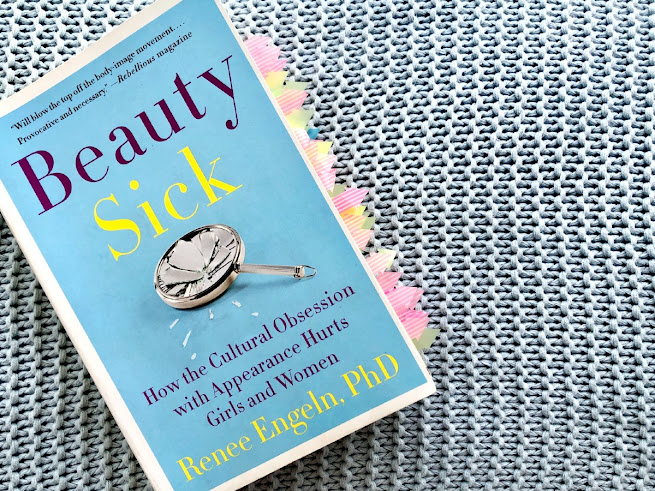

In the book Beauty Sick, Renee Engeln talks about how modern society’s obsession with physical appearance slowly chips away at our self-worth, mental health, and even our ability to focus on what actually matters.
From magazine covers to social media influencers, we’re constantly surrounded by “perfect” bodies and faces, most of which are unrealistic, edited, filtered, surgically altered, or medically manipulated in some way.
Over time, this sends a quiet but powerful message, that one kind of beauty is better, and that certain features need to be fixed or replaced.
From an Islamic perspective, this obsession points to a deeper imbalance.
Islam doesn’t deny beauty. The Prophet Muhammad ﷺ said, “Allah is Beautiful and loves beauty.”
But Islam draws a clear line between appreciating beauty and building your identity around it.
When appearance becomes central, it slowly pulls attention away from purpose, character, and inner stability. The Qur’an reminds us that a person’s worth isn’t in how they look or their status, but in their consciousness and conduct.
One of the things that stood out to me most in this book is how beauty obsession shrinks your life through constant comparison and self-monitoring.
When so much mental energy goes toward how you look, it takes away from creativity, relationships, learning, and service.
Islam counters this by grounding identity in one’s relationship with Allah rather than public approval. And that grounding naturally softens the anxiety that comes from trying to meet ever-changing beauty standards.
On a personal level, this book made me reflect on how much of my life before Islam was shaped by vanity and constant self-awareness.
I spent so much mental energy thinking about how I looked, how I was perceived, and whether I was meeting the image I felt pressured to maintain.
It was exhausting in ways I didn’t fully recognize back then.
Embracing Islam shifted that focus for me.
Covering my beauty removed a layer of performance I didn’t even realize I was carrying.
Instead of centering my value on my body or face, I started paying more attention to my inner state, my character, my intentions, and how I show up in the world.
Letting go of that constant concern with appearance didn’t make me care less, it made me feel lighter.
It created space for what actually lasts.
The book also talks about how unrealistic beauty standards contribute to mental health struggles like body dissatisfaction, body dysmorphia, and disordered eating.
Islam addresses this in a quiet but powerful way through balance.
The body is something to care for, but not obsess over.
Care without fixation.
Attention without constant self-surveillance.
Another takeaway that really aligned with both the book and Islamic principles is being intentional about influence.
Islam teaches us to guard what we consume, not just food, but imagery, messages, and environments built on comparison.
Unfollowing accounts that make you feel insecure, limiting exposure to unrealistic beauty content, and surrounding yourself with people who uplift rather than criticize can genuinely change how you feel about yourself.
In the end, this book names a cultural illness many of us feel but struggle to explain.
From an Islamic perspective, the answer isn’t chasing self-love as an identity, but putting things back in their proper place.
Beauty can be appreciated and cared for, but it was never meant to define a person’s worth.
When beauty stops being the center of life, the heart steadies, and identity becomes rooted in something far more lasting.
 Honestly, Vanessa