My daughter is biracial.
She’s lighter skinned.
I’m brown.
She has most of my features, my eyes, my nose, my face shape, my chin, my expressions, but she isn’t brown like me.
I woke up the other morning feeling confident and calm, just in my natural face, no makeup, messy mom bun, real life.
And then my daughter said something that caught me completely off guard.
She told me she thinks people with “bright” skin are beautiful, and that people who aren’t bright are less beautiful, maybe not even beautiful at all.
As a woman who isn’t “bright,” and as her mother, I’m naturally an exception to this in her eyes.
Of course she thinks I’m beautiful, but there’s a condition.
I’m less beautiful when I’m not wearing the makeup that makes my face appear brighter, lighter, and less brown.
And that stings.
She’s just a child so it wasn’t out of cruelty, it was simply the patterns she’s already learned to recognize. We’re born with brains that look for patterns.
When she said that to me, it stirred up years of quiet beauty standards I didn’t even realize I was still carrying.
Because the truth is, kids aren’t born thinking lighter skin is prettier.
They learn it.
They notice who gets praised, who gets centered, and who gets chosen.
Who gets cast as the pretty on and who gets to be the princess.
And over time, those patterns quietly turn into beliefs.
Looking back at my own childhood, almost every lead actress I admired looked the same.
Light skin. Eurocentric features. They didn’t look anything like me. It was a version of beauty that felt inaccessible.
And without realizing it, that did something damaging to my confidence.
I grew up feeling ugly because when the world keeps showing you one version of “beautiful,” you quietly assume that’s the standard.
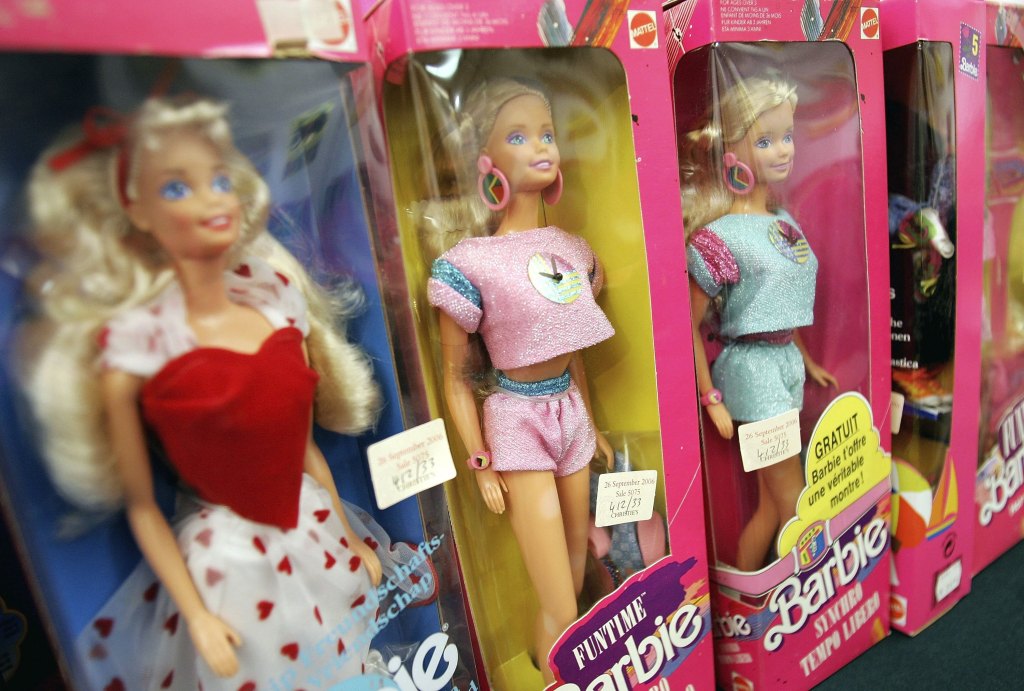
Even as a child, I remember playing with Barbies and only wanting the white dolls.
I honestly don’t even remember darker skin tones being widely available back then (this was circa 1998–2001), but even if they were, I wasn’t drawn to them.
Part of that came from media, but part of it came from home too. My mom carried a colorist mindset herself.
She’s brown, but on the lighter side, and growing up she would often comment on how the light-skinned dolls or people were more beautiful.
Of course my mother always thought I was beautiful because I wasn’t as dark and narcissistic mothers pride themselves on keeping up the appearance of their children. It was the most important thing to them.
She took me to the salon every two weeks and my hair always had to be straight. Relaxed. My natural hair was never good enough so it was about hair too.
It was about fitting into a version of beauty that felt more acceptable.
She even took me to a modeling gig once, to see if I was “pretty enough” to be chosen.
I still remember standing there while the judges picked only the white girls and some Asian girls. They all had pale skin.
It was humiliating for me, but I wasn’t surprised either. I cried for a bit, but moved on. It was my first real lesson in how narrowly beauty was being defined.
And when media and family are sending the same message, it sinks in even deeper.
Fast forward to motherhood, I’ve actually tried to be intentional with my daughter.
I actually bought my daughter Barbies of all different skin tones.
Different hair textures. Different looks. I wanted her to grow up seeing beauty in every shade.
But what I’ve learned is that toys can’t compete with what kids see on screens every day.
TV shows and movies left a bigger impression and was more repetitive. They tell stories over and over about who is beautiful, who is special, and who gets chosen.
And little minds absorb it.
I even started feeling guilty for letting her watch television so early, because beauty bias starts forming far sooner than we realize.
Now, I gently remind her that Allah created beauty in every skin color. That lighter doesn’t mean prettier and that brown skin is beautiful too.
I didn’t give her a lecture because the goal isn’t to shame kids for repeating what they see. It’s not their fault.
It’s heartbreaking to realize how early the world had already begun shaping her idea of beauty.
But it was also a reminder I needed myself.
That my worth was never meant to be measured against someone else’s skin tone.
 Honestly, Vanessa
Leave a comment