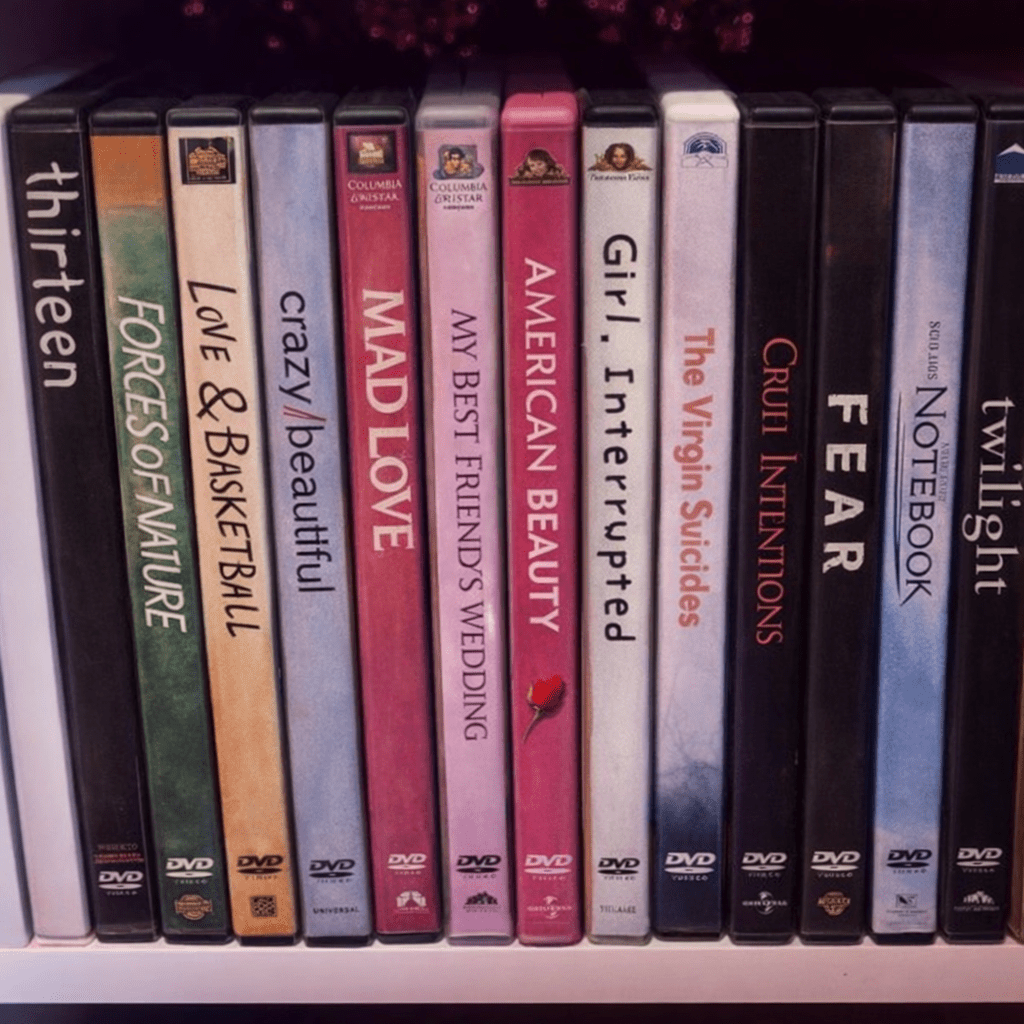
Movies didn’t just teach me about relationships, they shaped the way I thought and noticed the world.
I learned to see life in scenes and arcs. To imagine people as characters with motives, wounds, and backstories. Every friendship had a subplot. Every challenge felt like a plot twist.
The quiet seasons of life felt like filler scenes I needed to rush through to get to the good part.
And without realizing it, movies began shaping what I thought love was supposed to feel like.
Hollywood’s Lessons (That Weren’t Love at All)
As I got older, my life became anything but ordinary. Drama always seemed to find me… or maybe I subconsciously invited it in.
Somewhere along the way, I started associating love with emotional highs and lows. With intensity. With unpredictability.
Emotional unavailability became “mystery.”
Toxicity became “chemistry.”
Possessiveness looked like passion.
When someone pulled away, I thought, here we go, the games begin.
When someone became controlling or obsessive, I read it as desire.
I didn’t realize I was measuring real relationships against fictional ones.
Movie after movie became a blueprint for how I thought love or life was supposed to feel.
Thirteen was my middle school obsession, raw, chaotic, messy. This one made teenage self-destruction feel raw but strangely aesthetic. It romanticized rebellion as identity, pain as belonging and chaos as coming of age. It was very early 2000’s angst culture.
Fear literally taught a generation that obsession =devotion. It romanticized that possessiveness is love, jealousy as passion and danger as excitement. The classic “he loves you way too much” energy.
Eternal Sunshine of the Spotless Mind made heartbreak feel so cosmic and beautiful. It romanticized painful love cycles, emotional suffering as depth and chaos as fate.
The Notebook is a sneaky one because it’s marketed as something different, but its still chaos coded. It romanticized constant conflict as chemistry, emotional extremes as soulmates and instability as true love. I definitely internalized this one.
Love & Basketball taught me that chasing someone who mistreated you and didn’t want you was dedication, not self-abandonment. I really struggle to re-watch this movie as an adult.
Forces of Nature showed me that being with someone you shouldn’t be with made it seem more meaningful. If love doesn’t shake your world, derail your plans, and feel chaotic… It must not be real.
The classic. One of my favorite highly stylized and romantic dramas of all time. Romeo and Juliet made impulsive, tragic love look noble and beautiful. Their relationship only exists inside violence, family conflict, secrecy, and danger. How exciting.
All of these films taught me that love had to feel overwhelming, painfully confusing, and dramatic as hell.
And without realizing it, I started to truly believe it.
Protecting the Next Generation
Now that I’m a mother and step-mother, I’m much more aware of how deeply stories shape us.
I’m intentional about what my kids take in, especially my stepdaughter.
As a Muslim child growing up in a culture with very different values, she’s already navigating a lot. So we talk about the relationships she sees on screen. We talk about what’s romanticized, what’s unhealthy, and what isn’t real life.
Not to ban movies.
But to give her awareness.
I want her to enjoy stories without letting them quietly write her expectations of love, worth, and relationships.
I want her to know that real love doesn’t need chaos attached to it.
Her generation has Wattpad stories full of obsession, control, jealousy, and emotional turmoil being turned into movies and series.
Toxic dynamics are still dressed up as passion. Chaos is still marketed as romance. A whole lot of meaningless sex as well.
The medium changed.
The message didn’t.
Which is exactly why these conversations with our kids matter so much. We need to help them watch with awareness instead of absorption.
Because stories don’t just entertain, they subconsciously teach us what love is supposed to look like.
Rewriting the Script
What we consume repeatedly becomes part of us.
Those films I watched in my formative years shaped my expectations, emotional regulation, self-worth, and identity more than I realized.
But those movies also taught me empathy. They taught me how to step into someone else’s world and feel the weight of their story. They helped me process emotions I didn’t yet have language for.
They weren’t completely harmful.
But they quietly taught me that intensity meant love, chaos meant passion, and pain meant depth.
But also more reactive.
More prone to romanticizing pain.
More likely to chase intensity instead of stability.
Now in adulthood, as a Muslim woman and as someone healing and trying to better herself, I’m unlearning these things.
I still love cinema. I do. But I’m more mindful about what I let shape me now.
I’m learning what healthy love actually looks like, not just what looks beautiful under mood lighting and violins.
If you grew up escaping into movies like I did, building your world around them, crying with characters, dreaming in scenes, you’re not broken.
And you’re not alone. You can choose to direct your own story now, with more softness, awareness, and peace.
 Honestly, Vanessa
Leave a comment