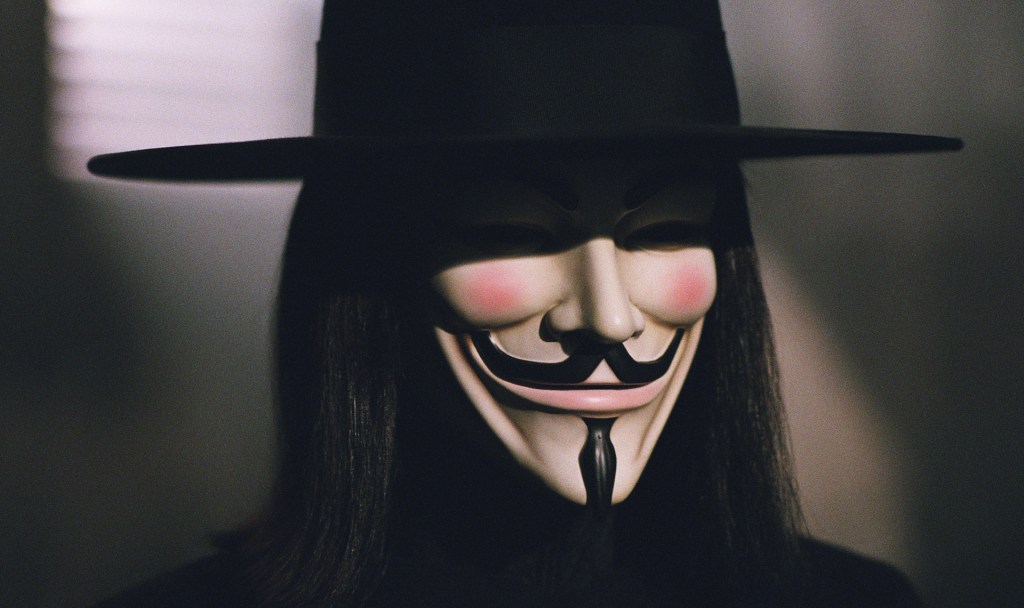
I’m rewatching V for Vendetta for probably the fifth time because it’s one of my favorite films, and this time it hit differently. Watching it again after everything that’s happened since October 7 made the movie feel less like fiction and more like a real-life question.
The film has always asked something uncomfortable: when people rise up against a system, are they heroes, terrorists, or just people shaped by trauma and long-term oppression?
Everyone loves the mask. Everyone loves the speeches. Everyone loves the idea of standing up to corruption. It feels powerful. It feels bold.
But when you take away the dramatic music and the cool visuals, you’re left with something harder to sit with. Is V actually a good person? Or is he a traumatized extremist whose cause might make sense, but whose methods are still questionable?
The government in the film is clearly corrupt. It controls the media. It spies on its people. It spreads fear on purpose. It even experiments on prisoners. This isn’t a neutral system. It’s already violent.
That matters because when a government is already causing harm, the conversation about resistance changes. If the system is violent first, does fighting back with violence automatically make you wrong? Or is there still a line that should never be crossed no matter how bad things get?
V is not calm or balanced. He is a survivor of torture. He was experimented on. He lost his identity before he ever put on the mask. So we have to separate two things: what he is fighting for and who he is emotionally.
Is he fighting for justice? Yes.
Is he also acting from deep trauma and anger? Probably.
And that’s where it gets complicated.
It would be easier if he were clearly good or clearly evil, but he isn’t. He targets people involved in the regime’s crimes, and some people would call that justice. Others would say killing and manipulation are wrong no matter the reason.
The part that really makes me uncomfortable isn’t even the explosions. It’s what he does to Evey. He locks her up and puts her through psychological torture to “free” her from fear. He believes he’s helping her become stronger. But she didn’t choose that. He forced it on her.
That’s hard to ignore.
Is that empowerment? Or is that control?
Can you traumatize someone into freedom?
That alone makes it impossible to call him a perfect hero.
Another big theme in the film is whether change has to come through destruction. V doesn’t try to fix the system. He doesn’t try to reform it. He blows it up. He believes it has to burn.
The movie kind of suggests that sometimes systems are too corrupt to repair. But it also shows that real change comes when people decide to wake up themselves. In the end, it’s not really about V anymore. It’s about the people. The mask becomes a symbol.
And that’s what makes this rewatch feel different right now.
After October 7 and everything that followed, these questions don’t feel abstract. In real life, people argue about who is resisting and who is terrorizing. Some see fighters as heroes. Others see them as monsters. And often, both sides believe they are morally right.
Real life is not a movie. There’s no clear villain monologue. There’s no perfect revolutionary. There are civilians. There is trauma. There is anger. There is propaganda. And once violence starts, it rarely stays clean.
Rewatching this film right now reminded me of something important. Supporting resistance against oppression does not mean you stop questioning methods. And condemning violence does not mean you ignore the injustice that led to it.
Both things can be true at the same time.
V is not a clean hero. He’s not a cartoon villain either. He’s a person shaped by trauma, fighting a corrupt system in extreme ways. His anger makes sense. His cause might make sense. His methods are still complicated.
And maybe that’s the point.
Maybe the real question isn’t whether someone fits into the label of hero or terrorist. Maybe the real question is how cycles of trauma and violence ever stop without creating more trauma and more violence in return.
 Honestly, Vanessa
Leave a comment